Vigneron Independent Australia
Autonomy and Independence
We are independent winemakers, and we take great pride in this. Our passion for the art of
traditional winemaking runs as deep as the roots of the vines in our vineyard. We have a
profound respect for the land and the environment, which we share with native wildlife and
fauna. This respect underpins the principles we strive to uphold every day.
It is only natural that, alongside tending to our vines and crafting our wines, we aim to share
this journey in every bottle we produce. Each bottle is a time capsule of our work,
representing the unique story of our family vineyard, and the growing season in which the
wine was produced from. These wines embody the concept of terroir, with every sip
connecting the land, the people, and the passion behind them.
In September 2024, a pledge was made to lay the foundations for a collective that would allow independent winemakers to unite and gain recognition for their craftsmanship. This initiative, known as Vigneron Independent Australia, seeks to honour and promote the work of independent winemakers across Australia.
The Vigneron Independent charter commits the winemaker to:
- Respect their terroir
- Work their vineyard
- Harvest their grapes
- Vinify and mature their wine
- Bottle their wines
- Market their products
- Strive for perfection while honouring tradition
- Being open and transparent about their products.
- Support their local community
- Welcome and encourage tastings, taking pride in presenting the fruits of their labour
“Transparency, Authenticity, Traceability, and Personality” is the motto that Vigneron Independent Australia strives to embody with every bottle of wine they produce.”
What is a vigneron?
The French word vigneron does not have a perfect English translation. It refers to a person who both grows their grapes, and also makes wine from their grapes. The term vigneron comes from the French word ‘vigne’ which means grapevine. So by translation, a vigneron is someone who is ‘close to the vine.’
In the wine industry, there are individuals who focus solely on growing grapes but do not
make wine themselves. These individuals are typically referred to as grape growers or
simply growers. They sell their harvested grapes to wineries or winemakers who handle the
production process.
On the other hand, many winemakers or wineries may not grow their own grapes. Instead,
they purchase grapes from growers or acquire grape juice and already-fermented wine from
various producers to blend and bottle under their own label. These producers focus primarily
on the creation of the final product rather than the cultivation of the grapes.
Such wine producers, who do not own and manage vineyards themselves, are not considered as vignerons. The term vigneron specifically refers to those who are involved in both growing the grapes and producing the wine, with a deep connection to their land from which the grapes are grown on.
For Vigneron Independent Australia, the term “vigneron” refers to someone who both grows grapes and produces wine from their vineyard site, with a strong emphasis on the crucial role of the vineyard in producing high-quality wine. Unlike a winemaker who may focus solely on the wine production process, a vigneron is deeply involved in every stage—from tending to the vines to crafting the wine. This definition highlights the vigneron’s holistic approach, where the vineyard’s health and sustainability are integral to creating exceptional wine. The term reflects a commitment to quality and the importance of the land in producing wines that express the unique characteristics of the vineyard.
Openness & Transparency
At Vigneron Independent, we champion transparency and openness, inviting winemakers to
share the story behind their wines, their vineyards, and their unique practices. Whether it’s
through engaging conversations, informative websites, or beautifully crafted marketing
materials, winemakers are encouraged to connect directly with consumers. For a more
personal touch, emailing is often the best way to reach out, as winemakers are typically
immersed in their vineyards or busy at work in the winery.
Vignerons who are already exporting their exceptional wines to Europe, or are planning to,
have embraced the continent’s stringent new regulations, which mandate full disclosure of all ingredients and additives used in wine production. These regulations surpass the domestic
labelling standards in Australia, reflecting Europe’s commitment to addressing the growing
consumer demand for cleaner, healthier choices.
Similarly, vignerons who follow traditional winemaking methods, maintaining full control
over their vineyards and fruit quality, often adopt a minimalist approach in the winery. With
the majority of the hard work done in the vineyard, they believe in allowing the wine to
express its true essence through minimal intervention. The result is wines that are pure,
natural, and a true reflection of the land from which they originate.
If you’re ever unsure or can’t find the information you’re looking for, don’t hesitate to reach
out directly to the winemakers. They’ll be more than happy to assist you and provide the
answers you need. Their passion for their craft and commitment to transparency means
they’re always eager to share their knowledge and ensure you feel confident in your wine
experience.
The Concept Of Terroir
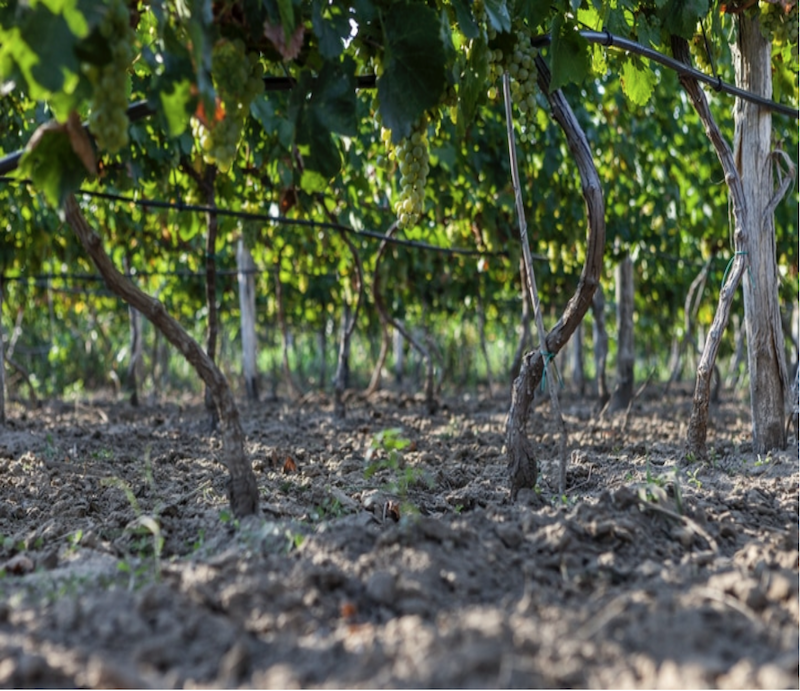
In brief terroir is the concept within viticulture that encompasses the full spectrum of environmental factors that influence grapevine growth and wine production, including soil composition, terrain, climate, and biodiversity, as well as the impact of vineyard management and winemaking practices, culminating in the unique characteristics of the wine produced in a specific location.
Key Considerations:
- Comprehensive Definition of Terroir: Terroir is not merely confined to the soil but extends to the entire growing environment, including vineyard location, topographical features (such as slope, altitude, and vineyard orientation), climate conditions (temperature, humidity, wind, rainfall, sunlight), and the surrounding ecosystem’s biodiversity. These factors collectively shape the quality of the grapes and, ultimately, the wine.
- The Role of Soil in Terroir: While soil is an essential element of terroir, it is not the singular determinant of vine health and grape quality. Grape vines are highly adaptable and can thrive in a wide range of soil types. However, what matters most is the soil’s ability to provide adequate drainage while retaining enough moisture and nutrients for the vine’s growth. Well-draining soils are critical in preventing waterlogging, which can damage the vine’s roots, while still providing sufficient moisture during drier periods.
- Influence of Vineyard Management and Winemaking Practices: Although terroir is primarily shaped by natural factors, human intervention through vineyard management practices and winemaking traditions can alter and enhance the expression of these elements. The way a vineyard is managed—such as through irrigation, pruning, and harvesting techniques—can significantly affect the final character of the wine.
- Struggle for Quality: A key principle in viticulture is that grapevines should face a certain degree of struggle in order to produce high-quality fruit. Excessive water and nutrients lead to vigorous vine growth, often at the expense of fruit concentration and complexity. A balanced approach, where vines are allowed to thrive under conditions that challenge them, ensures that energy is directed toward producing smaller, more concentrated, and flavourful grapes, ultimately contributing to the depth and quality of the wine.
Simply put, terroir conveys a sense of place and time.
Discovering the uniqueness of Terroir
Here in Australia, there are a number of vineyard regions that transverse the landscape. Even when the grape variety remains the same, each individual vineyard’s unique characteristics leave an indelible mark on the wine. The concept of terroir is central to this, shaping the flavour of the grape and ultimately determining the taste and structure of the final wine.
This is precisely why wines made from the same grape variety, even within the same region, state, or country, can taste entirely different. The influence of terroir—the combination of soil, climate, and topography—creates wines that tell a story of their specific environment.
This is also why tasting notes often delve into the nuances of terroir, offering insights into the soil composition, slope, rainfall patterns, and the year’s weather conditions. These details help to paint a picture of how the land shapes the wine. However, terroir alone does not dictate the final outcome. The artistry of the winemaker, with their individual techniques and approach, plays an equally vital role, adding layers of distinction to each bottle.
While terroir might seem like a complex concept at first, it boils down to a simple yet profound idea: it is the soul of the vineyard, the “sense of place” that imprints itself on the wine. To truly grasp the essence of terroir, there’s no better way than to explore single-vineyard wines. These wines, sourced from a single, distinct site, offer a pure, unfiltered expression of the land’s unique influence.
To truly understand terroir, you need to experience it firsthand—by savouring the wines that bear the imprint of the land they come from.
The Influence of Terroir on Wine: The Circle of Influence
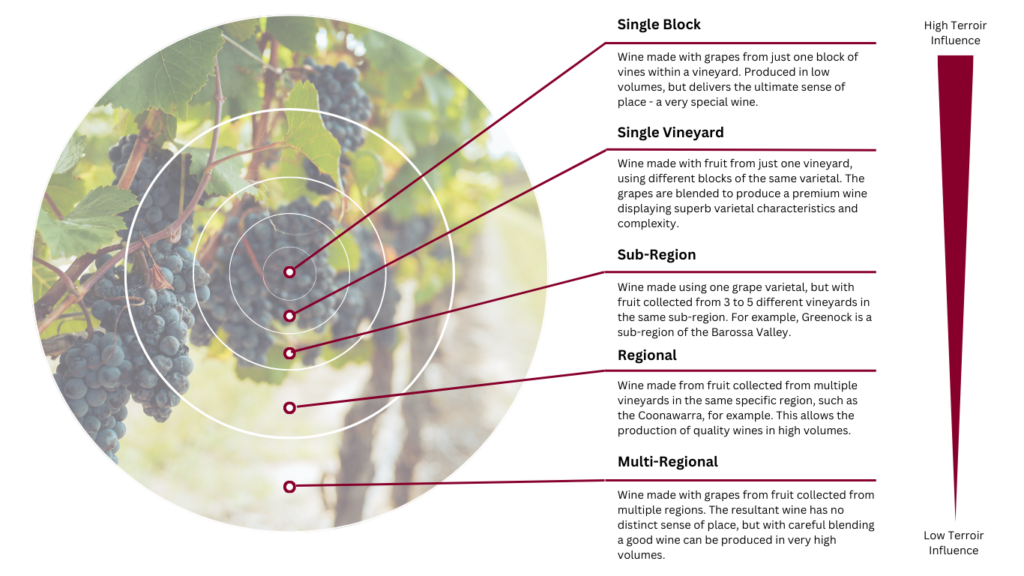
I understand that terroir can seem complicated and confusing, but it’s actually a powerful
concept that shapes the character of the wine. To simplify this, I’ve created the following
diagram, which I like to call Terroir’s Circle of Influence.
At the centre of the circle are Single Block Wines, which represent the most direct and
impactful example of terroir. Terroir plays a vital role in distinguishing the quality and
unique characteristics of these wines. Single block wines come from specific vineyard blocks
with distinct soil, microclimate, and geography, which give them a strong sense of
place—often reflecting rare earth elements and mineral qualities found only at that vineyard
location.
These wines are typically produced in small volumes by experienced vignerons who have a
deep understanding of their vineyard. They are intimately involved in every aspect of the
vineyard’s care—from pruning to harvesting—which allows them to craft wines that are truly
exceptional and distinctive.
As you move outwards through the diagram, the influence of terroir diminishes. In the outer
circle, terroir is no longer a significant factor in the finished wine. This is where you’ll find
Commercial Wines. These wines are produced on a larger scale, and their main
distinguishing feature is consistency in profile.
These wines are produced using modern winemaking techniques that focus on consistent
extraction, colour, flavour, and appearance. The emphasis is on minimising vintage variation,
ensuring the wine maintains a uniform taste and profile year after year. This approach is well
suited for high-volume production at low cost, with grapes sourced from various regions,
diminishing the importance of terroir. The lack of distinct regional characteristics allows for
the simulation of desired flavours, regardless of grape origin or vintage year.
While these wines lack the unique sense of place which single-vineyard wines have, they
serve an important role in the marketplace, particularly within supermarket chains and large
retail wine outlets where traceability and terroir aren’t key factors in consumer purchasing
decision.
By simplifying terroir into a circle of influence, you can easily see how its impact changes
from single block wines (where terroir is crucial) to commercial wines (where it’s less
relevant). I hope this has help clarify the concept of terrior.
Supporting Community
When you choose to support the little guy, you’re championing the heart and soul of our
regional communities—the small towns where local businesses and tourism are the lifeblood.
It’s those weekend getaways, the Sunday drives through fresh country air and golden
sunshine, discovering hidden gems you never knew existed. And it’s the warmth of country
people, those who work the land and brave the elements to bring you their best.
This is more than just a lifestyle for them; it’s a way of life they’ve chosen, and they
welcome you with open arms when you visit. The Independent Vigneron is the backbone of
these communities. Their existence creates jobs, opens doors for young people to learn the
craft, and ensures the knowledge is passed down, so future generations can enjoy the pure,
handcrafted wine they’ve come to love.
These families wouldn’t be here without your support. They pour so much of themselves into
their work, giving back to their communities and caring for those around them, living by the
true Aussie spirit of mateship. We’re a tough breed us Aussies, proud and strong, always
there to lend a hand, in both good times and bad. That’s what makes us unique—our ability to
stand together and rise when needed.
So, when you raise a glass of wine bearing the Independent Vigneron label on the bottle,
you’re not just tasting nature’s finest. You’re supporting families, regional communities, and
everyone involved in the wine industry. The ripple effect is endless, with every purchase
helping to sustain this vibrant culture.
Most importantly, you’re backing the little guy, helping to preserve a craft that’s at risk of
fading away as commercial giants take over the landscape. We raise our glasses to
you—because by supporting us, you too are part of something truly special. You’re a true
blue, and we thank you from the bottom of our hearts.
Vignerons Independent are 100% Australian owned family business.
Our History
Vigneron Independent Australia: A Global Commitment to Craftsmanship and Terroir
Vigneron Independent Australia was founded by two individuals united by a passion for
handcrafted, estate-grown single-vineyard wines and traditional winemaking methods that
require minimal intervention. Above all, they have a deep respect for the land that nurtures
the grapes, the belief that exceptional wines are made in the vineyard, driven by the concept
of terroir.
While the Australian chapter is relatively new, it is part of a global network that spans France
and Italy. This collective is committed to preserving the integrity of centuries-old
winemaking traditions while embracing innovation and excellence. Despite Australia’s
younger wine industry, its vignerons share the same dedication and craftsmanship as their
European counterparts, ensuring that Australian wines stand proudly among the world’s
finest.
The connection to Vigneron Indépendant France began with a powerful realisation—a logo of
a person carrying a wine barrel on their shoulders, on a bottle of French wine that symbolised
a shared journey of small, family-owned wine producers one defined by struggle, dedication,
and a steadfast commitment to purpose. The encounter inspired the creation of Vigneron
Independent Australia, with the French chapter’s guidance helping shape the values of
authenticity and craftsmanship that drives the Australian movement.
Though the founders of Vigneron Independent Australia prefer to remain unnamed, their
shared commitment to supporting small producers and preserving traditional winemaking
practices is at the heart of the movement. A French girl and an Italian boy, united by their
passion for wines that reflect the unique terroir of each vineyard, established a platform to
showcase authentic, sustainable wines. This movement celebrates small-scale winemaking,
rooted in terroir and environmental responsibility, while offering consumers a chance to
discover wines from independent producers who uphold these values.
Appelation
An appellation signifies a specific geographic area where grapes are grown, with each area possessing unique soil, climate, and topography, collectively referred to as terroir.
In France an appellation is a legally defined and protected geographical indication primarily used to identify where the grapes for a wine were grown
In Australia, the term region refers to a specific geographic area where grapes are grown for wine production. The word appellation occasionally appears in literature, but the term GI (Geographic Indication) is more commonly used in the Australian wine industry. A GI defines a particular grape-growing region from which the grapes used in the production of a wine are sourced.
Examples of well-known Australian wine-growing regions include Barossa in South Australia and Margaret River in Western Australia. There are over 60 such regions across Australia, and they are typically referred to as wine regions.
These regions vary in size and are located across different states. On a wine label, the name of a state—such as Product of South Australia—might be used to indicate that the grapes came from South Australia, which has multiple wine regions. In broader terms, Product of Australia may be used to indicate that the grapes and the wine itself are sourced from anywhere within Australia.
On the other hand, the terms sub-appellation or sub-region are used to define more specific areas within a larger wine region. For example, Barossa Valley is a sub-region of the Barossa wine region. Only wines made from grapes grown in the Barossa Valley can use that name on the label.
Relating this to the concept of terroir, soil types and other climatic factors that define terroir can vary significantly within a larger region and less so within a smaller sub-region. For instance, in the Barossa Valley, areas like Greenock and Ebenezer (located in the north-western part of the valley) have distinct terroirs that influence the character of the wine produced there. Although the Barossa Valley does not officially have defined sub-regions, the specific characteristics of the area affect the wines.
In contrast, many European wine regions, like those in France, have long-established sub-regions with protected classifications. One well-known example is the Champagne region, where wines produced in specific areas may be labeled with terms like Grand Cru or Premier Cru. These terms refer to the quality of the vineyard site, not the wine itself.
The term Cru is French for “growth” and is used to classify vineyards based on the quality of wine they consistently produce. In Burgundy, for example, the most prestigious vineyards are classified as Grand Cru. The second-highest classification is Premier Cru, followed by Village and Regional appellations.
The appellation system in Europe guarantees the source of the grapes, the vineyard management practices, and sometimes even the winemaking techniques. This provides consumers with a guide to the wine’s style and quality. Other countries like Italy and Germany use similar systems to classify wine quality based on region and vineyard.